
5 Ways Cooking Helps Kids Learn Math and Science Skills in the Kitchen
If you’ve ever seen your child carefully measure flour or count blueberries, you’ve already witnessed hands-on learning in action. Cooking turns abstract lessons into fun, real-world experiences, that naturally become math and science activities in the kitchen for kids.
In the kitchen, every scoop, stir, and sizzle is a chance to learn. Through cooking, children discover the building blocks of math and science in ways that are engaging, meaningful, and confidence-building.
1. Learning Math Through Cooking: Measuring, Counting, and Fractions Made Fun
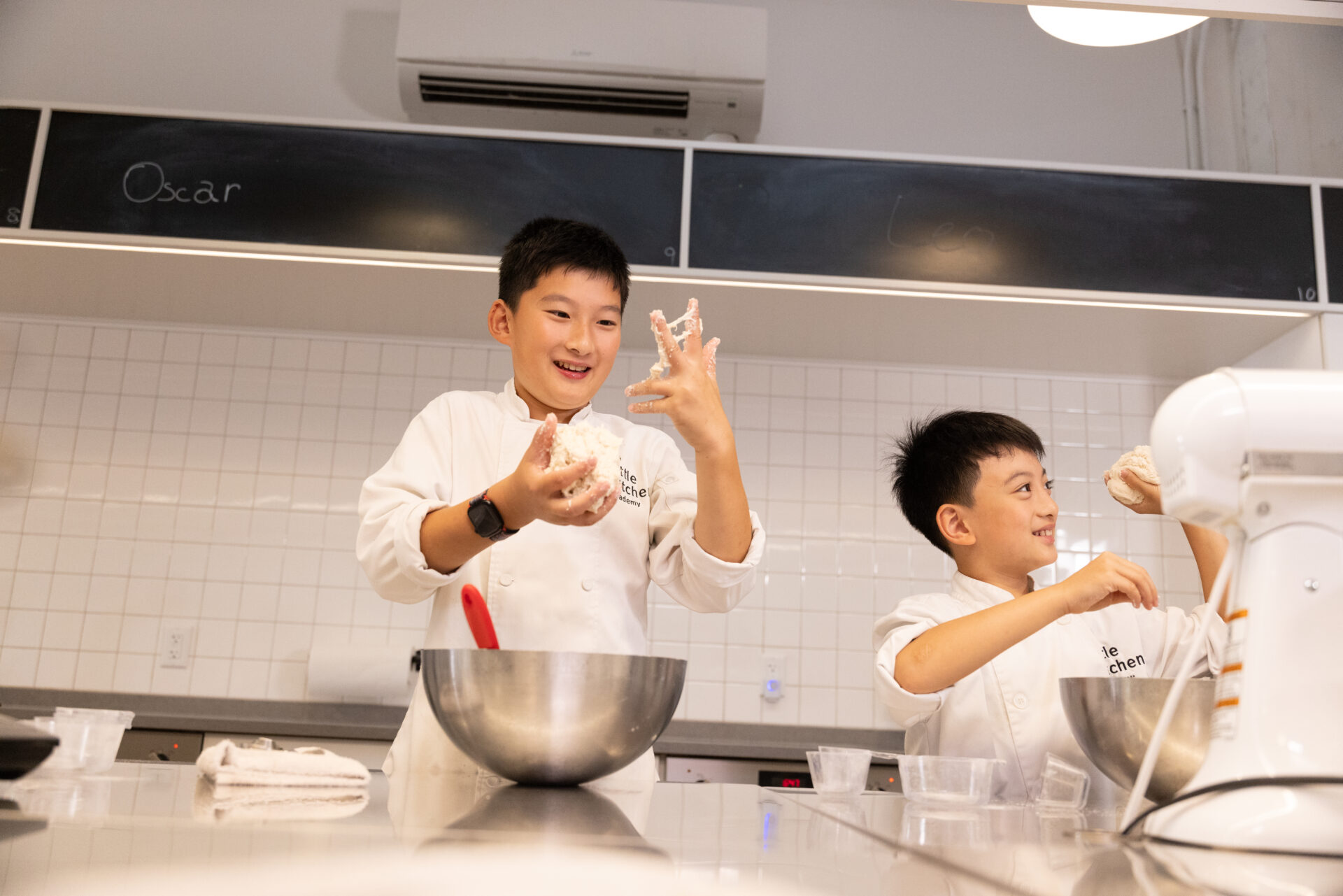
Cooking helps children practice math skills every time they measure, count, or divide ingredients. Doubling a recipe introduces multiplication; slicing fruit into halves and quarters builds fraction fluency.
From the moment a child begins helping with a recipe, they’re developing key math skills:
- Measuring ingredients like flour, milk, or oil
- Counting items (12 blueberries, 2 eggs)
- Understanding fractions (½ cup, ¼ teaspoon)
- Converting or doubling recipes
- Sequencing steps and estimating time
💡 Did you know? Hands-on learning can increase children’s ability to understand and retain math concepts, especially when tied to real-world activities like cooking.
2. Visual Math for Kids: How Kitchen Tools Teach Fractions
For younger learners, abstract numbers can be hard to grasp, but the kitchen makes math visual.
At Little Kitchen Academy, we use Welcome Industries measuring cups that are designed to help children see fractions in action. A ⅓ cup is visibly one-third the size of a full cup. When children collect dry ingredients and compare them, they gain a real sense of proportion and spatial reasoning.
Nesting and stackable tools also reinforce how three ⅓ cups make one whole, turning math into something they can see, feel, and understand.
3. Science in the Kitchen: Fun Experiments Kids Can See and Taste
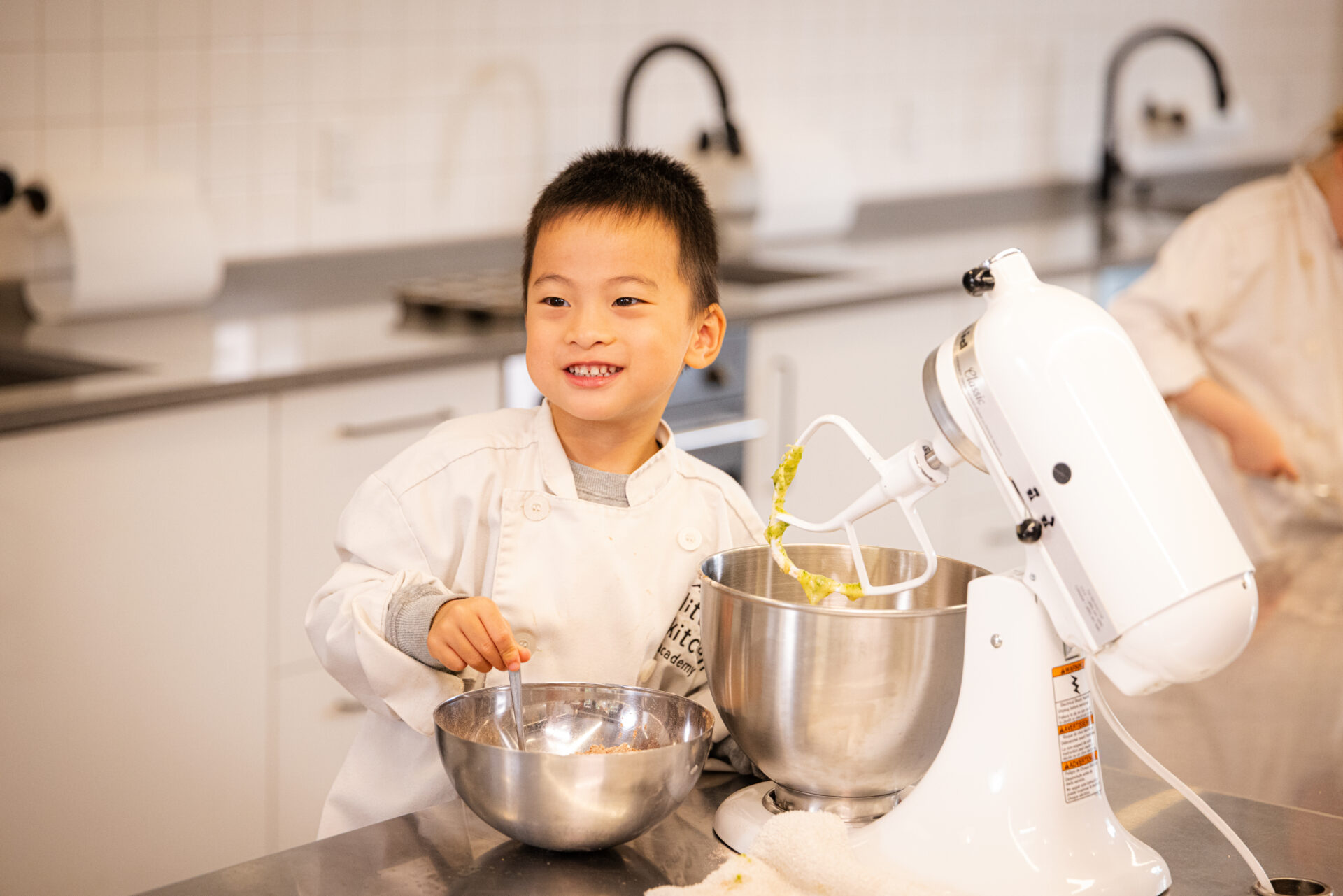
Every recipe is a mini science lab. From the blooming of yeast to watching onions caramelize, cooking helps children explore chemistry and physics in action.
In every class or home kitchen, kids are practicing key scientific skills:
- Observation: noticing how butter melts or eggplants release moisture when coated in salt
- Prediction: guessing what will happen if they change ingredients
- Cause and effect: seeing how temperature or time alters results
- Chemical reactions: caramelization when root vegetables are roasted
Ask questions as you cook:
“Why do you think the pancake batter is bubbling?”
“What happens if we use frozen berries instead of fresh ones?”
These small moments nurture curiosity and scientific thinking in a delicious way.
4. Cooking Builds Confidence: Real-Life Learning That Lasts
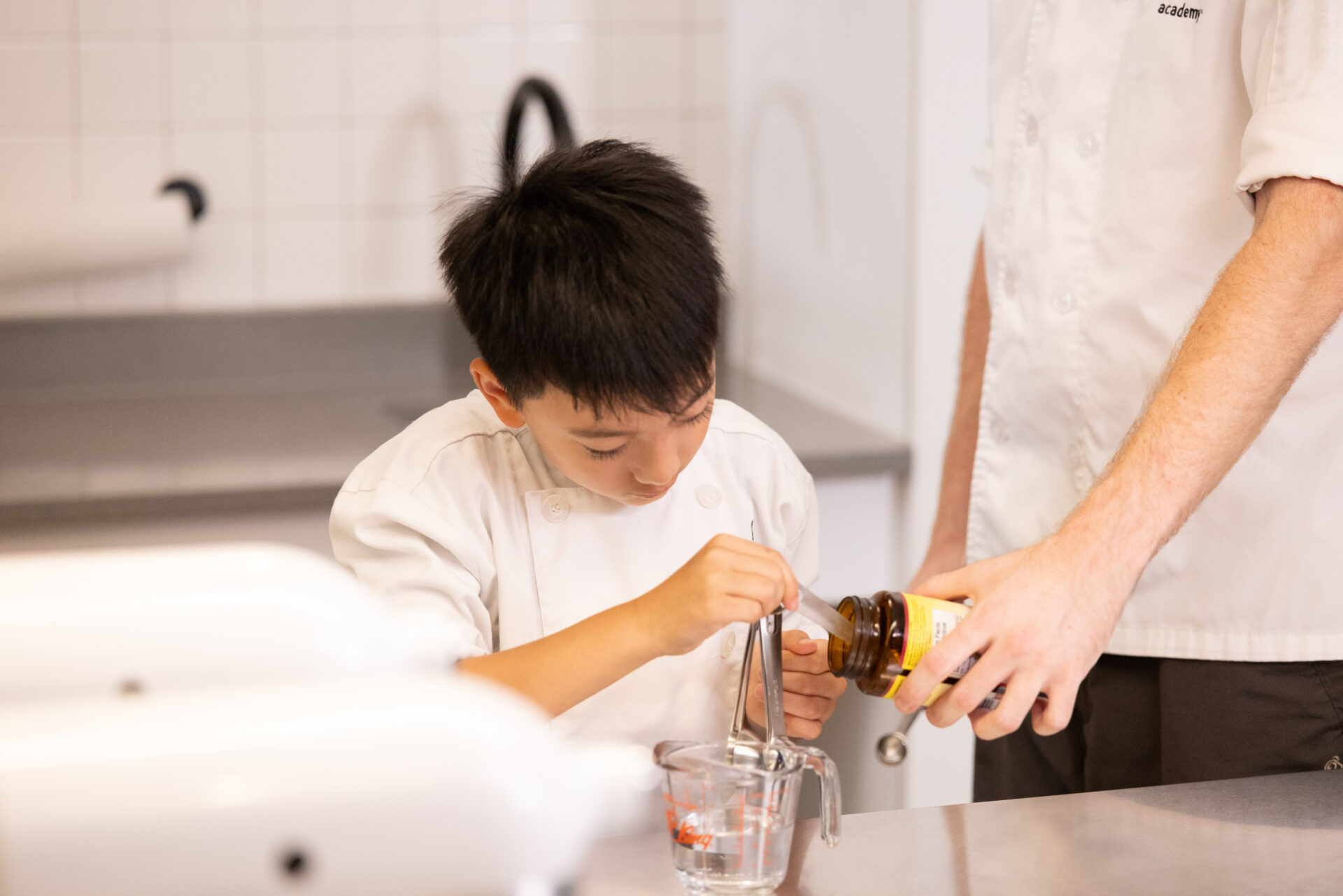
What makes kitchen learning so powerful is that it’s real. Children aren’t solving problems on a worksheet; they’re cooking for their families. That gives their work meaning and builds long-lasting confidence.
When a child successfully measures, mixes, or solves a mid-recipe problem, they’re learning persistence, patience, and problem-solving. Each success reinforces their belief that they’re capable both in and out of the kitchen.
💡 Tip: Let your child take the lead when it’s safe to do so. Mistakes are just part of the process, and some of the best learning moments!
5. Easy Kitchen Activities for Parents: Teaching STEM at Home
Try simple, everyday activities like:
- Measuring dry and wet ingredients
- Counting scoops, pieces, or spoonfuls
- Sequencing recipe steps in order
- Discussing temperatures, textures, and timing
- Watching how ingredients change with heat or cold
Create a Cooking Journal where your child draws or writes about what they made and what they learned. This bridges creativity, reflection, and STEM in one fun, low-pressure activity.
Enroll Your Child in STEM in the Kitchen This Winter
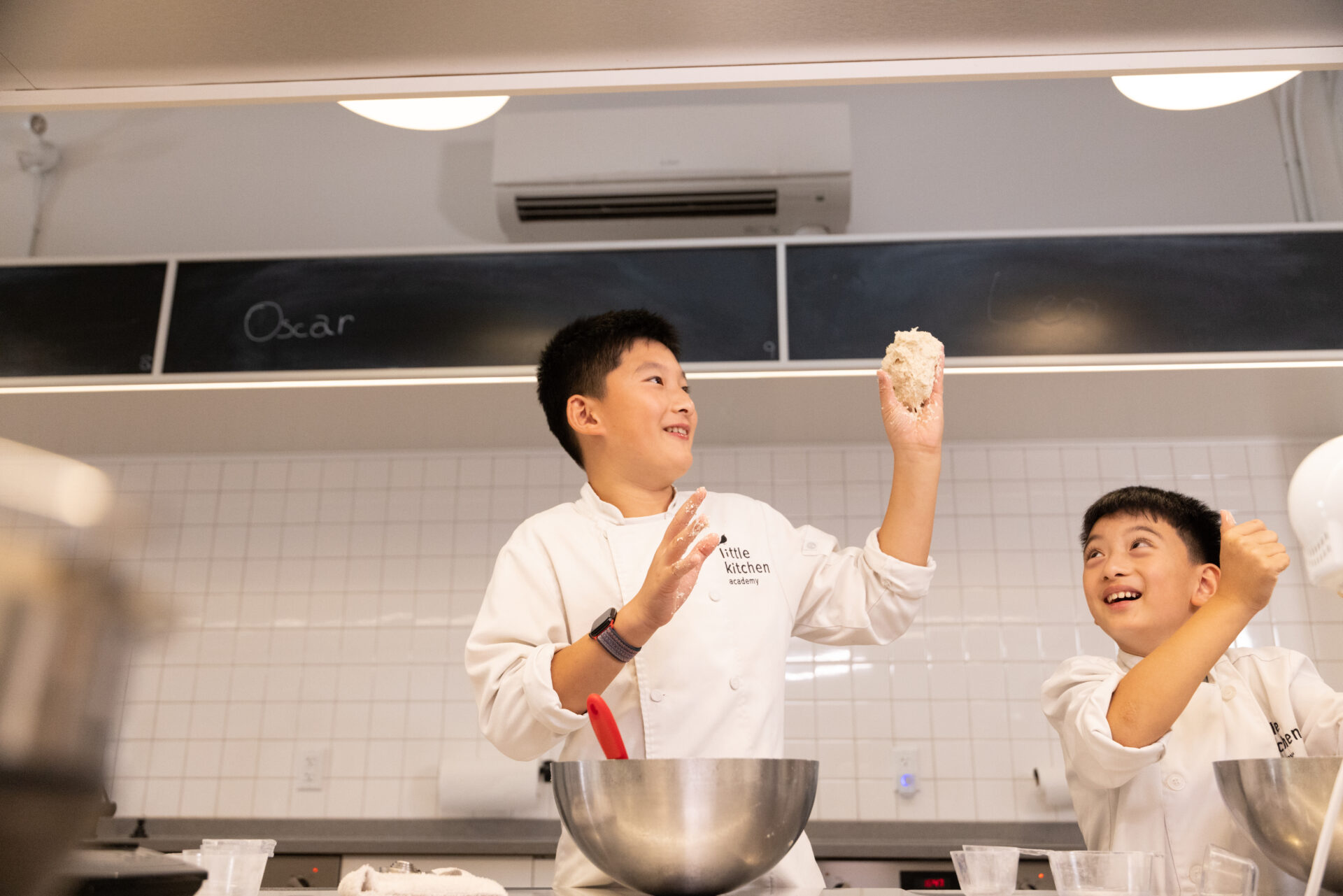
At Little Kitchen Academy, students learn math, science, and life skills through cooking in a Montessori-inspired environment. Every class is filled with opportunities to measure, mix, and observe change, building confidence and independence along the way.